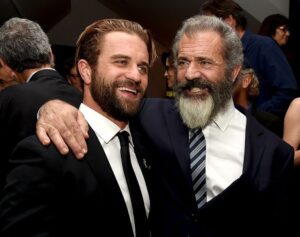
People often assume that children of celebrities grow up surrounded by luxury, privilege, and endless opportunities.
From the outside, it is easy to imagine that every door opens automatically for them and that success arrives without effort.
Yet the reality is often much more complicated.
Growing up as the son of a global superstar can create expectations that feel impossible to escape.
For Milo Gibson, the son of Hollywood icon Mel Gibson, life was never as simple as many people believed.
While millions recognized his father from blockbuster films and award-winning performances, Milo spent much of his childhood experiencing something far more ordinary.
Born in Australia and later raised in California, he grew up in a large family where his parents made a conscious effort to keep their children grounded. Rather than being pushed toward red carpets and film premieres, Milo spent his early years focused on the same things many children enjoy—sports, friendships, outdoor adventures, and family life. The Gibson household emphasized responsibility and hard work instead of celebrity culture. While famous actors and entertainers occasionally passed through their lives, Milo was taught to see them as people rather than larger-than-life figures. As a result, he developed a practical outlook that would later influence many of his decisions. Long before he ever considered acting, he dreamed about careers that had nothing to do with cameras. Unlike countless young people who move to Los Angeles hoping to become movie stars, Milo actively avoided that path. He wanted to build something that belonged entirely to him. Even as public fascination with his father continued to grow through films like Braveheart and other major productions, Milo focused on discovering his own identity. That determination to create an independent life would become one of the defining themes of his story.
As he entered adulthood, Milo took a route that surprised many observers. Instead of stepping directly into the entertainment industry, he pursued ordinary jobs and practical work. He spent time working as a massage therapist and later trained as an electrician. These were not glamorous careers, but they offered something he valued deeply: independence. He enjoyed interacting with everyday people and appreciated the satisfaction that came from tangible work. In interviews, Milo has explained that he was attracted to professions where results could be seen immediately and where success depended on effort rather than reputation. Friends who knew him during those years often described him as approachable and down-to-earth. He rarely used his family connections to gain attention and preferred conversations that focused on shared interests rather than celebrity gossip. At the same time, carrying the Gibson name inevitably brought challenges. People recognized the surname instantly and often made assumptions before they had even met him. Some expected him to become an actor. Others believed his life must have been effortless because of his family background. Milo found himself constantly navigating expectations that had little to do with who he actually was. Yet those experiences also taught him resilience. Rather than becoming frustrated by public assumptions, he learned to let his actions speak for themselves. He focused on building character through work and experience, believing that genuine achievement mattered more than public perception. Looking back, those years outside Hollywood may have been some of the most important in shaping the person he would become. They allowed him to mature away from cameras and headlines, giving him the opportunity to develop confidence based on his own accomplishments rather than his father’s fame.
Despite his efforts to build a completely separate life, storytelling and film eventually began pulling him toward the industry he had spent years avoiding. The attraction did not arrive suddenly. Instead, it developed gradually through curiosity and a growing appreciation for the creative process. Having spent years observing the dedication required to produce films, Milo began seeing acting not as celebrity status but as a craft. He recognized the discipline involved and became interested in learning whether he could succeed on his own merits. Encouraged by that curiosity, he decided to explore opportunities in front of the camera. His early experiences were challenging. Although many people assumed his surname would guarantee success, entering the industry still required auditions, preparation, and persistence. Milo understood that audiences would compare him to his father whether he wanted them to or not. That reality created pressure, but it also motivated him to work harder. One of his significant early opportunities came when he appeared in Hacksaw Ridge, a project directed by his father. For Milo, the experience offered a unique education. He was able to observe filmmaking at a high level while also proving he could perform professionally alongside experienced actors. Rather than treating the project as a shortcut, he approached it as a chance to learn. Colleagues noted his willingness to listen, adapt, and improve. The set became a classroom where he gained firsthand knowledge about storytelling, character development, and the demands of professional filmmaking. More importantly, he discovered that acting genuinely excited him. The challenge of stepping into different roles, understanding characters, and connecting with audiences gave him a sense of purpose that reminded him of the satisfaction he had found in other jobs. For the first time, he could imagine building a future in entertainment—not because of family expectations, but because he truly enjoyed the work.
As Milo continued pursuing acting, he began assembling a filmography that reflected his determination to establish his own reputation. He appeared in independent productions and steadily accepted a variety of roles designed to broaden his experience. Instead of chasing immediate blockbuster fame, he focused on learning the profession from the ground up. That strategy required patience. Every project became an opportunity to improve. Some films received modest attention, while others introduced him to new audiences and industry professionals. Throughout this process, comparisons to Mel Gibson remained unavoidable. The resemblance between father and son frequently became a topic of discussion. Their facial features, expressions, and overall appearance often led people to comment that Milo looked remarkably similar to the younger version of his father. Fans occasionally approached him and remarked that he could easily pass as Mel Gibson decades earlier. While such comparisons generated publicity, they also highlighted the challenge of forging an independent identity. Milo responded by maintaining a sense of humor. Rather than becoming frustrated, he often acknowledged the similarities while emphasizing that he wanted his work to speak for itself. Over time, audiences began paying attention not only to his appearance but also to his performances. Industry observers recognized that he possessed his own strengths, bringing a different energy and perspective to the screen. Every role helped him move a little farther from the shadow of expectations and closer to recognition as an individual actor. The process was gradual, but it reflected a lesson that many successful people learn: sustainable careers are rarely built overnight. They emerge through consistency, persistence, and a willingness to keep improving even when immediate rewards are limited.
Meanwhile, the relationship between Milo and his father continued to evolve in meaningful ways. Although their careers eventually intersected, their connection was rooted in far more than filmmaking. Mel Gibson had long encouraged his children to pursue what genuinely interested them rather than what others expected. That philosophy gave Milo the freedom to experiment with different careers before discovering his passion for acting. Instead of pressuring his son to enter Hollywood, Mel emphasized the importance of finding personal fulfillment. The advice proved valuable because it allowed Milo to arrive at acting through choice rather than obligation. Their shared experiences in film later created opportunities for mutual respect and collaboration. Yet even as Milo gained visibility, he continued drawing from lessons learned outside the entertainment industry. The years spent working ordinary jobs had taught him humility and appreciation for hard work. Those experiences also helped him connect with a broad range of people, enriching the characters he portrayed on screen. Success did not erase the practical mindset he had developed earlier in life. Friends and colleagues frequently described him as grounded, approachable, and focused on continuous growth rather than fame. Such qualities became increasingly important as public attention expanded. In an industry where image often dominates conversations, Milo’s willingness to remain authentic distinguished him from many contemporaries. He understood that careers rise and fall, trends change, and public opinions shift. What endures is character. By staying connected to the values that shaped him, he built a foundation capable of supporting long-term success regardless of where his acting journey might lead.
Today, at thirty-five years old, Milo Gibson represents something that resonates far beyond Hollywood. His story is not merely about being the son of a famous actor. It is about discovering personal identity in the shadow of enormous expectations. It is about understanding that privilege may open certain doors, but lasting achievement still requires dedication and effort. The public often focuses on how closely he resembles his father, and there is no denying the striking similarities. Yet the deeper story lies in the choices he made along the way. He could have relied solely on family connections, but instead he spent years building experience through ordinary work. He could have chased attention from the beginning, but he chose a slower path of self-discovery. And when he finally entered acting, he approached it as a profession to be mastered rather than a birthright to be claimed. Those decisions transformed public perception and allowed him to establish credibility on his own terms. As his career continues to develop, audiences will undoubtedly remain curious about what comes next. Whether he takes on larger film projects, explores new creative challenges, or follows unexpected opportunities, one thing is clear: his journey has already demonstrated the value of perseverance and authenticity. For many people, that lesson is far more inspiring than celebrity itself. Milo Gibson’s life shows that while family legacy can shape a beginning, it does not have to define an ending. Ultimately, the most meaningful accomplishments are the ones earned through personal conviction, hard work, and the courage to become exactly who you choose to be.